

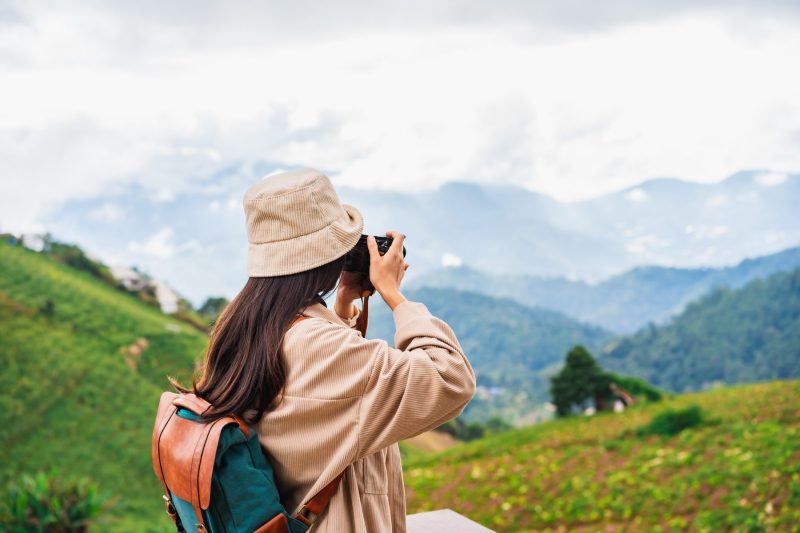
A young traveler with a hat and backpack takes a landscape photo of the mountains.
Travel photography is a fulfilling and thrilling endeavor, even if it seems a bit daunting to novices. The wonderful thing is that you do not need an exotic location, flawless landscapes, or high-end gear to start honing your craft. The most important step is simply becoming accustomed to observing your surroundings, trying new things with your camera, and gaining experience through consistent practice.
Whether you are embarking on a cross-country car road trip, checking into a roadside motel, or just navigating the streets of your own hometown, there are always intriguing details and fleeting moments to capture. With a curious mindset and a willingness to learn, you will discover that taking photos on the road is less about finding perfect scenarios and more about the simple pleasure of documenting the world as you experience it.
Getting Started with Travel Photography
Embarking on your travel photography journey is rarely about arriving at the "perfect" spot; rather, it is about cultivating a keen awareness of your environment. It involves training yourself to notice unique lighting, interesting patterns, and candid moments, wherever you are. During a car road trip, your vehicle or your nightly lodging often serves as your base of operations and an excellent place to warm up your creative eye. Whether it is a scenic view from your car window or the architectural quirks of a rest stop, these low-pressure settings offer a great starting point before you venture further.
Once you are out exploring, let your natural curiosity guide you. Wander down unfamiliar roads, step into local diners, observe the distinct rhythm of a new town, and keep an eye out for scenes that convey a narrative. Your objective is not to photograph every single thing you encounter, but to slow down, take it all in, and allow the environment to show you what is truly captivating.
Essential Photography Equipment for Beginners
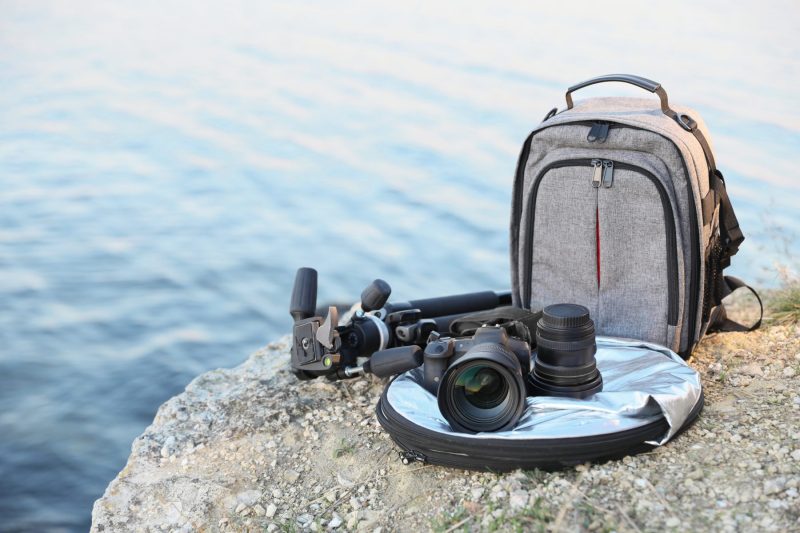
Professional photography equipment on a rocky river coast next to the water.
Curating a compact, dependable gear kit makes shooting on the road significantly easier, especially when you frequently transition between your car, hotel rooms, and outdoor environments. Resist the urge to pack every piece of equipment you own. Instead, focus on versatile essentials that allow you to adapt to varying light and dynamic shooting conditions.
- Camera or Smartphone: Utilize the device you already possess. Today's smartphones offer robust manual controls and RAW shooting capabilities that are more than sufficient for most travel situations.
- Versatile Lens: If you use a dedicated camera, a standard zoom lens (such as an 18-55 mm or 24-70 mm) or a compact prime lens (like a 35 mm or 50 mm) provides ample creative flexibility.
- Spare Memory Cards: These are indispensable for long days on the road or when shooting high-resolution files.
- Extra Batteries: You may not always have access to an outlet while driving or exploring, so bringing backup power is highly recommended.
- Lens Cleaning Cloth: Dust, fingerprints, and road grime accumulate quickly and can ruin a great shot if you cannot clean your lens promptly.
- Lightweight Tripod or Mini Stand: A small stand is incredibly useful for capturing low-light scenes, stabilizing indoor shots, or taking self-portraits.
- Protective Bag: A padded case ensures your equipment stays safe while navigating crowded tourist spots or bouncing around in your vehicle.
Travel Photography Tips for Beginners
Once you have familiarized yourself with your equipment, adopting a few simple habits can drastically improve the intent and expression of your images. These strategies are particularly beneficial when adjusting to new destinations, unpredictable lighting, and the diverse environments you will face on your journey:
- Work With Available Light: While early mornings and late afternoons provide beautiful, soft lighting, you should also practice shooting in harsh midday sun, as your desired subject might not wait for perfect conditions.
- Give Scenes a Moment to Develop: Lingering in one location lets you observe interactions, gestures, and patterns you might miss if you rush.
- Stay Nimble: Keeping your gear setup simple encourages spontaneous movement and creativity, helping you avoid getting bogged down by heavy equipment.
- Edit With Care: Subtle tweaks to your framing, color balance, and exposure can enhance your photos without stripping away their authentic feel.
- Choose Small Daily Themes: When a new location feels visually overwhelming, focus on specific elements like shadows, reflections, or repeating shapes to maintain your creative momentum.
- Back Up Your Photos Each Night: Transferring your images to a separate drive or cloud storage daily ensures you will not lose your hard work to a device malfunction or an accidental drop.
Common Travel Photography Mistakes
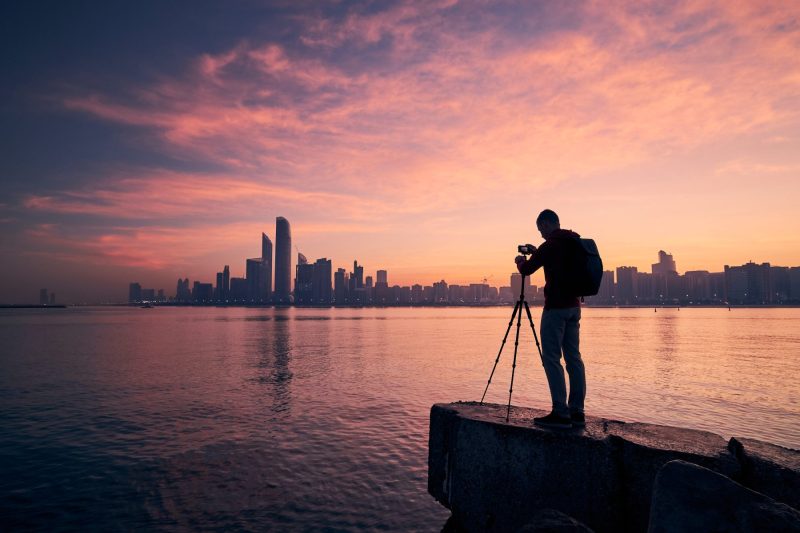
A silhouette of a young photographer capturing the Abu Dhabi skyline at dawn, United Arab Emirates.
Photographing your travels is a continuous educational process, and making errors is entirely normal. Recognizing these frequent missteps will help you produce more consistent work and preserve the quality of your visual stories:
- Relying Only on Auto Mode: Push yourself to experiment with manual or semi-manual settings to take full control over your creative output.
- Photographing Everything You See: Instead of snapping pictures aimlessly, hone in on the specific details, moments, and narratives that actually captivate you.
- Ignoring the Background: Unintended subjects or distracting clutter in the background can easily ruin an otherwise powerful composition.
- Heavy-Handed Editing: Overusing aggressive filters and cranking up the saturation often detracts from the genuine moment you tried to preserve.
- Losing Situational Awareness: Always remain aware of your surroundings, including traffic, uneven terrain, and local hazards; your personal safety must always be your top priority.
Finding Your Photography Style and Vision
Cultivating a distinct personal style requires experimentation, patience, and objective self-evaluation, and traveling provides the ultimate testing ground. Encountering novel lighting, fresh perspectives, and unfamiliar textures helps you pinpoint the visual elements that truly resonate with you.
- Shoot the Same View at Different Times: Notice how drastically the light alters a scene by photographing a single view, like the landscape outside your hotel window, at various points throughout the day.
- Pick a Theme or Constraint: Challenge yourself to build a mini-series around a specific concept, such as motion, geometric shapes, or black-and-white imagery.
- Study Admired Artists: Analyze the work of photographers you look up to, identifying what specifically attracts you to their minimalist approach, storytelling, or lighting techniques.
- Review Your Photos Regularly: Take the time to look back through your portfolio to spot your visual preferences, recurring patterns, or areas where your technique needs improvement.
- Experiment with a Variety of Subjects: Do not limit yourself; try capturing everything from local cuisine and candid street scenes to sweeping architecture and portraits.
- Try Limitation Challenges: Boost your creativity by imposing strict rules on yourself, such as shooting with a single prime lens or limiting your photo walk to a single city block.
Additional Travel Photography Resources
-
- National Geographic: Tips for Taking Better Travel Photos
- Adobe: Discover the Art of Travel Photography
- Canon Pro: Essential Travel Photography Tips
- Nikon Learn & Explore: Photography Glossary
- NPR: How to Take Good Vacation Photos
- NPCA: Take Better Park Photos
- New York Institute of Photography: The Essential Photographer’s Travel Kit
- Travel + Leisure: Pro Tips for Travel Photography
- REI Expert Advice: How to take better photos with your phone
- Pocket Suite: How to Become a Travel Photographer
- B&H Photo Video: 10 Essential Travel Photography Tips
- Outdoor Photographer: Master Your Travel Photography
- Digital Photography School: The Ultimate Travel Photography Guide
- Magnum Photos: Theory, Practice, and Documentary Advice
- Format Magazine: Travel Photography Guide for Beginners