

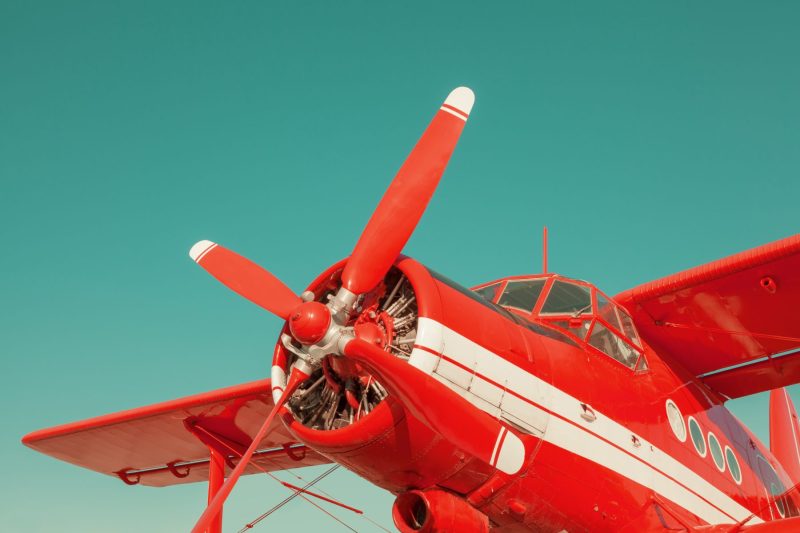
A red biplane against a clear sky, with a close-up view of its engine and propeller.
Aviation developed over centuries of experimentation, beginning with early attempts to understand lift through kites, balloons, and gliders. These early efforts were driven by observation of bird flight and a growing interest in controlled human flight.
The breakthrough came when powered, controlled flight became possible, transforming aviation from experimental science into practical transportation. From that point forward, rapid advances in engineering and propulsion turned flight into a global system that reshaped travel, commerce, and military capability.
Major Milestones in Aviation Progress
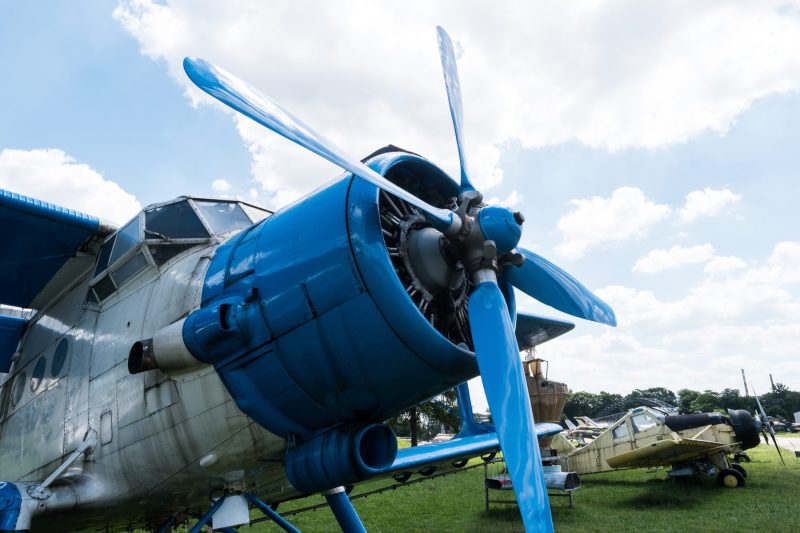
A vintage aircraft on display at an aviation museum in Krakow, Poland.
Aviation progress is best understood as a sequence of technological breakthroughs, each solving a core barrier to flight, such as lift, control, range, or speed.
Timeline of Aviation Development
Aviation history can be mapped through key moments that marked major shifts in capability and design.
- 1783: First hot air balloon flight demonstrated in France
- 1843: Early aircraft engine and fixed-wing design patents emerge
- 1903: First powered, controlled airplane flight achieved
- 1909: First cross-channel flights demonstrate endurance capability
- 1919: First major commercial airline services begin
- 1927: Transatlantic solo flight completes historic milestone
- 1947: Sound barrier officially broken in controlled flight
- 1952: First commercial jet passenger service introduced
- 1969: Supersonic Concorde enters service era
- 2000s: Modern wide-body jets transform global air travel efficiency
Early Aviation Pioneers and Innovators
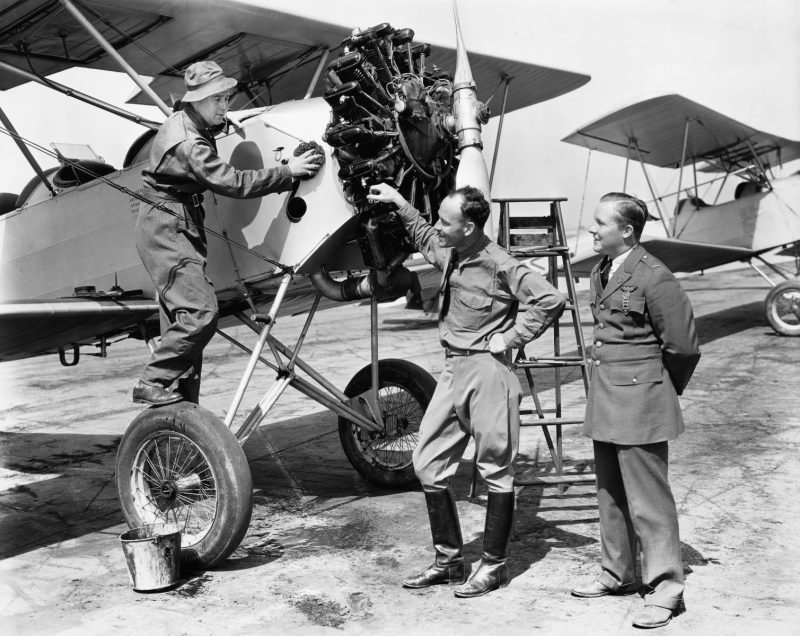
Three men stand beside an aircraft, engaged in conversation.
Early aviation was driven by a series of inventors and engineers who contributed essential breakthroughs in aerodynamics, propulsion, and aircraft design. These developments gradually made controlled flight possible.
Key pioneers and contributions include:
- Early balloonists who demonstrated sustained human flight
- Glider experimenters who advanced aerodynamic understanding
- Engineers who developed early propulsion and engine systems
- The Wright brothers, who achieved the first controlled, powered airplane flight in 1903
Origins of the First Airplane
The first successful airplane was developed through years of experimentation with gliders, engines, and control systems. The defining breakthrough came in 1903, when the Wright brothers achieved the first controlled, sustained, powered flight in a heavier-than-air aircraft.
This achievement marked the transition from experimental prototypes to functional aviation, establishing the foundation for modern aircraft design and flight control systems.
Development of the First Jet Aircraft
Jet propulsion emerged in the 1930s and 1940s as engineers developed turbine engines capable of producing far greater speed and altitude performance than piston engines.
Early jet aircraft were first used in military aviation before rapidly influencing commercial aircraft design, enabling faster, more efficient long-distance air travel and reshaping global transportation networks.
Introduction of Commercial Supersonic Flight
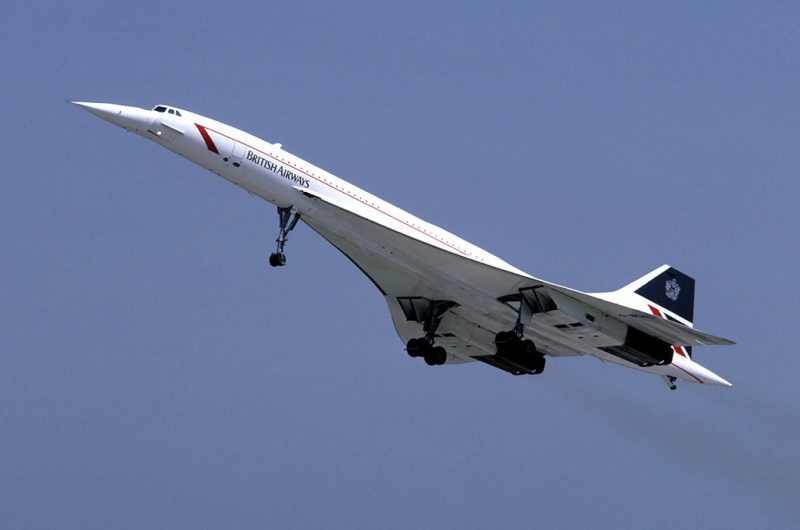
The British Airways Concorde supersonic airplane in flight. Photo: Eduard Marmet / Wikimedia Commons — CC BY-SA 3.0

Supersonic passenger aviation introduced the ability to travel faster than the speed of sound, dramatically reducing long-distance travel times and reshaping expectations around international mobility. It represented a major engineering leap, requiring advances in aerodynamics, materials, and engine performance to safely sustain flight at Mach speeds over extended distances.
Tupolev Tu-144
The Tupolev Tu-144 was an early supersonic passenger aircraft that demonstrated the feasibility of commercial Mach-speed flight. Developed in the Soviet Union, it marked a significant milestone in aviation history as the first aircraft of its kind to achieve supersonic passenger capability. Despite its technological ambition, the aircraft faced operational limitations, shorter service life, and ongoing technical challenges that restricted its long-term commercial success.
Concorde
The Concorde remains the most successful commercial supersonic aircraft to date. It operated international passenger routes for several decades, most notably between Europe and North America, dramatically reducing transatlantic travel times. Beyond its technical achievements, Concorde became an enduring symbol of speed, luxury, and engineering excellence in civil aviation, representing the peak of commercial supersonic travel before its retirement.
Despite technical success, high operating costs, noise restrictions such as sonic booms over populated areas, and significant fuel demands limited long-term commercial expansion. These constraints ultimately confined supersonic travel to a niche market, but the legacy of these aircraft continues to influence modern research into next-generation high-speed and low-emission aviation systems.
The Lasting Impact of Aviation Innovation
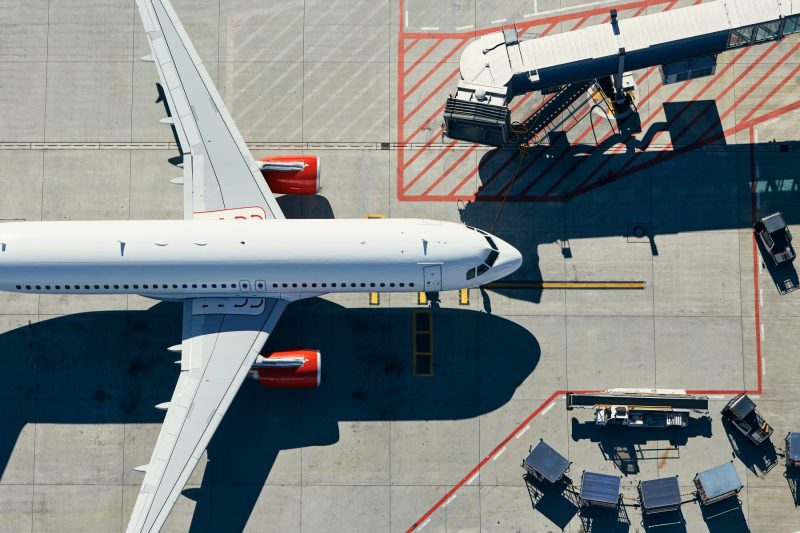
An aerial view of a commercial airplane at an airport.
Modern aviation has developed through steady advances in lift, propulsion, and aircraft design, moving from early experimental flights to highly reliable global transport systems. Each breakthrough built on earlier discoveries, gradually improving safety, range, and efficiency while expanding what was possible in the air.
Today, aviation connects economies and people across continents in a matter of hours. Commercial flight supports international trade, tourism, and essential services, while ongoing innovation continues to improve fuel efficiency, reduce environmental impact, and enhance overall performance. Emerging technologies such as sustainable fuels and electric propulsion point toward the next stage of development, where efficiency and environmental responsibility play a larger role in shaping flight.
Additional Resources for Further Reading
-
- Physics History: November 1783 - Intrepid Physicist is First to Fly
- The First Flights of the Montgolfier Brothers
- Who Were The Wright Brothers?
- History of the Airplane
- 120 Years Ago: The First Powered Flight at Kitty Hawk
- The 1909 Wright Flyer: The World's First Military Airplane
- The Tu-144LL: A Supersonic Flying Laboratory
- The British Airways Concorde
- When and Which Country Developed the First Jet Aircraft?
- The Heinkel He 178
- Aviation Fun Facts: 15 Most Interesting Facts About Aviation
- A Glimpse into 2050: What is The Future of the Aviation Industry?